Challenge 1
Geology to Processing Data Chain
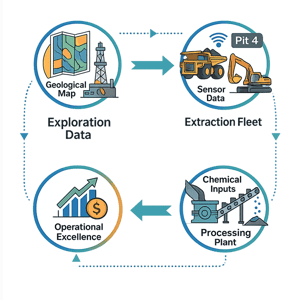
Mining operations span from geological exploration through extraction to mineral processing and shipping. Data flows from geological databases and assay systems through mine planning tools, fleet management systems, crushing and grinding operations, beneficiation processes, and ultimately inventory and shipping systems. Each domain may use specialized systems with different data models.
Industry practitioners note that connecting ore characteristics from geology (grade, mineralogy, hardness) with processing performance (recovery rates, throughput, reagent consumption) requires integrating data across multiple systems. Understanding how ore variability affects downstream processing can require manual data compilation from disconnected sources.
Challenge 2
Equipment and Fleet Management at Scale
Large mining operations may manage fleets of hundreds of mobile equipment units (haul trucks, excavators, drills, loaders ) plus stationary equipment for processing. Equipment data exists across fleet management systems, maintenance databases, telematics platforms, fuel management, and spare parts inventory systems.
Organizations report that getting complete equipment lifecycle views, such as utilization patterns, maintenance histories, failure modes, operating costs, can require accessing multiple systems with different equipment identifiers. This fragmentation can limit the effectiveness of maintenance optimization or fleet replacement decisions that require understanding true total cost of ownership.
Challenge 3
Production Planning vs. Actual Performance
Mine planning systems generate production plans based on geological models, equipment capabilities, and market demands. Actual production data comes from fleet management systems, process control in mills, quality assays, and shipping records. Reconciling planned versus actual performance requires connecting these different data sources.
Industry experience suggests that variances between planned and actual production may stem from geological uncertainties, equipment availability, processing recovery rates, or other factors. Quickly identifying root causes requires cross-system analysis that may involve manual data gathering when systems aren't integrated.
Challenge 4
Environmental and Tailings Management
Mining environmental data includes water quality monitoring, air quality measurements, tailings storage facility instrumentation, reclamation tracking, and biodiversity monitoring. This data may come from environmental monitoring systems, laboratory databases, IoT sensors, GIS platforms, and compliance tracking tools.
Organizations note that regulatory reporting and stakeholder transparency initiatives require aggregating environmental data from multiple sources, validating against permit conditions, and demonstrating monitoring program effectiveness. Manual compilation of environmental reports from disconnected systems can be time-intensive, particularly for companies operating multiple sites.
Challenge 5
Safety and Operational Risk Management
Mining safety data comes from diverse sources: incident and injury records in safety management systems, near-miss reporting databases, hazard assessments, equipment inspection records, training databases, and operational monitoring systems. Connecting leading indicators (inspections, near-misses, hazard reports) with lagging indicators (actual incidents) requires integrating data across multiple platforms.
Industry practitioners observe that safety analysis often requires correlating safety events with operational conditions, work schedules, equipment status, and environmental factors. This cross-domain analysis can be challenging when relevant data exists in disconnected systems managed by different departments.