

Organizing Brownfield Data Across Multiple Plants.



Build and Operationalize Enterprise Context on Databricks
Unify enterprise data, ontology, and meaning into a single semantic layer that enables AI systems to operate with governed, relationship-aware business context.
Deployed fast. Scaled in the cloud.
WHAT SETS US APART
Business-Ready Modeling
Empower domain experts with a no-code interface that lets them build and evolve semantic models without relying on engineers.
Databricks Built On Partner
 Kobai operates within Databricks enhancing data discovery and AI capabilities. Read more →
AI-Ready Data Layer
Contextualize your data with integrated semantics, lineage, and relationships—ready to feed BI tools, LLMs, and automation pipelines.
Built for Your Data Cloud
Kobai operates within the customer’s governed data environment. It does not require customers to move data into a separate Kobai-hosted graph database.
From Disconnected Data to Connected Intelligence
HOW KOBAI WORKS

Data Discovery & Metadata Mapping
View More ➝

Semantic Modeling & Ontology Design
View More ➝

Context Enrichment & Governance
View More ➝

Query & Relationship Resolution
View More ➝

AI & Analytics Integration
View More ➝
Connect Where Your Data Already Lives

Kobai connects directly to your existing data platforms and analyzes metadata to understand structure, entities, and relationships.
Technical Capabilities
-
Native connectivity to Databricks (including Unity Catalog), Snowflake, Azure Data Lake, and relational databases via JDBC/ODBC.
-
Metadata ingestion and schema introspection without moving data to an external graph database.
-
AI-assisted recommendations for identification of candidate entities and relationships.
-
Support for structured and semi-structured formats (Delta, Parquet, JSON).
-
Operates within the customer’s governed data environment.
Semantic processing and materialized structures remain within the customer’s governed Databricks environment.
Define Your Business In Business Terms
Kobai enables domain experts to model real-world concepts such as Asset, Supplier, Work Order, or Part — and define how they relate across systems.
Ontology & Model Management
-
Visual, no-code semantic modeling interface.
-
Version-controlled ontology management.
-
Role-based governance and change control.
-
Version-controlled ontology management.
-
Ontology-driven semantic modeling informed by established semantic modeling patterns.
- Industry accelerators for aerospace, energy, pharma, manufacturing.
Instead of mapping tables to tables, Kobai models business meaning — creating a durable semantic layer that aligns engineering, operations, and IT.
Add Lineage, Trust, and Control

Kobai enriches data with business context, lineage, and governance controls — transforming raw records into trusted knowledge.
Governance & Lineage
-
Entity- and attribute-level lineage tracking.
- Data quality scoring and validation rules.
-
Audit trails for ontology and mapping changes.
-
Fine-grained access control at the semantic node level.
This ensures compliance-heavy industries can trust every answer and trace it back to source systems.
Ask Business Questions. Get Answers Grounded in Context.
Users interact with data through natural language or visual tools. Kobai resolves relationships semantically before executing optimized queries across connected systems.
Query Translation Engine
-
Natural language translated into optimized SQL across Databricks, Snowflake, and other connected systems.
-
Graph-based relationship resolution prior to query execution.
-
Federated querying across multiple data environments.
-
Query optimization and caching.
-
API access for programmatic integration.
Users don’t need to understand schemas or write complex joins. The semantic layer handles complexity behind the scenes.
Ground AI in Verified Knowledge

Kobai exposes semantically enriched data directly to BI tools, ML pipelines, and LLM frameworks — providing the structured context required for accurate AI.
AI & Lakehouse Integration
-
REST and Graph APIs for downstream consumption.
-
Designed to support RAG and GraphRAG architectures.
-
Compatible with modern lakehouse environments.
-
Operates within your existing cloud security perimeter.
The knowledge graph acts as a grounding layer reducing hallucinations and improving AI reliability by providing structured, traceable context.

INNOVATIVE AEROSPACE MANUFACTURER
INNOVATIVE AEROSPACE MANUFACTURER
Streamlining Maintenance Operations through Semantic Data Integration.
Read More
LEADING ENERGY CORPORATION
LEADING ENERGY CORPORATION
Streamlining Brownfield Data Integration for Enhanced Operational Insights
Read More
Explore more success stories
VIEW ALL
Explore more success storiesVIEW ALL
Discover how organizations across industries are transforming data into outcomes.
Read MoreA Business Context Layer That Works Where You Do
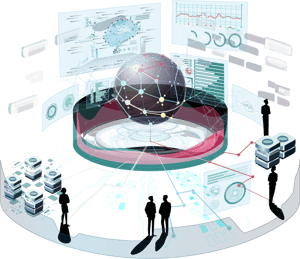
Kobai creates a shared, reusable business context layer that connects siloed data across systems, teams, and platforms. It runs natively on Databricks, integrates deeply with Snowflake and Azure, and overlays your architecture to bring meaning, consistency, and trust to every decision.
One layer. Multiple wins:
- Reduce decision latency with business-ready context
- Eliminate redundant data integration and rework
- Build trust and lineage into every report
- Accelerate AI and automation across your existing stack
Your teams stop duplicating effort. Insights become consistent. Compliance gets easier. And AI initiatives finally have trusted context to build on.

TOUCH
Code-less Querying
Code-less Querying
Business users can easily explore, ask questions, and filter data, using intuitive visual tools and semantic context.

TOUCH
AI & ML Enablement
AI & ML Enablement
Use connected graph data to train, validate, and deploy models with rich, meaningful features.

Integrations
Easily connect to platforms like Snowflake, Databricks, Azure, SAP, and more, with APIs to handle both structured and unstructured data.
Integrations
Easily connect to platforms like Snowflake, Databricks, Azure, SAP, and more, with APIs to handle both structured and unstructured data.
